Amazon FBA vs Amazon FBM: Which is the best logistics choice for your business?
What is Amazon FBA and what is Amazon FBM?
First, let's review the definitions:
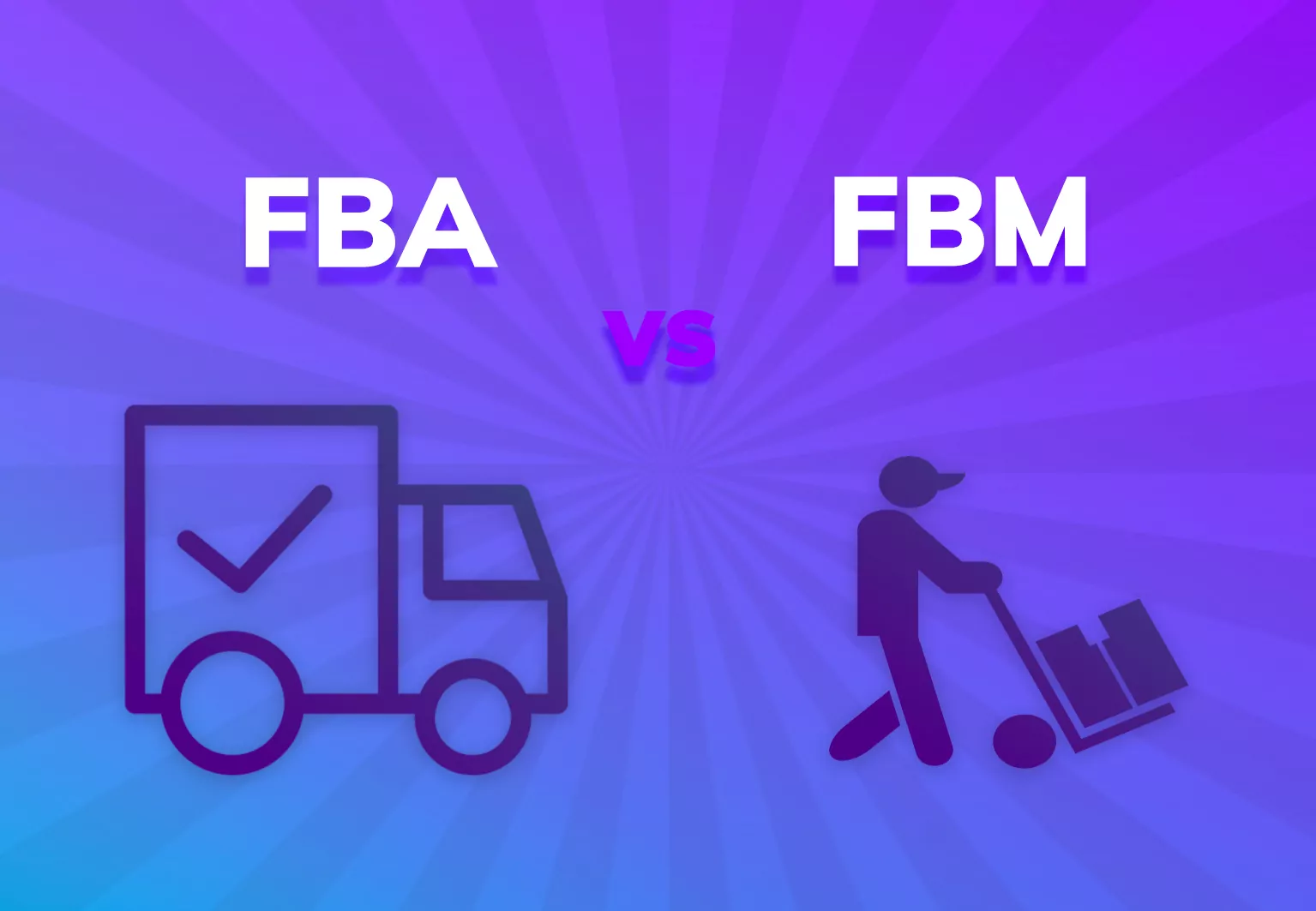
What is Fulfilled by Amazon (FBA)?
Your stock is sent to an Amazon distribution center and the marketplace handles the shipping of your products to the end customer.
What is Fulfilled by Merchant (FBM)?
You store and ship your products yourself. The marketplace then becomes solely a sales channel, but you do not benefit from Amazon's logistical power.
Learn more about how Amazon FBA works.
We will list the advantages and disadvantages of the Amazon FBA program compared to the FBM program, then we will explore some avenues to guide you in your choice.
Amazon FBA vs. FBM: The Advantages of the FBA Program
Simplified logistics thanks to Amazon FBA
Certainly the biggest advantage for many sellers: Amazon handles all the logistics after the order is placed. Packages are prepared and shipped by Amazon without you having to worry about a thing. You simply need to track your sales, ensure that Amazon's warehouse is well-stocked with products, and order processing takes care of everything without any intervention on your part.
The Amazon FBA program relieves you of almost all the logistics (you still have to ship the products to Amazon), for a very competitive cost compared to what managing logistics internally would cost you.
Amazon FBA: a fast and comprehensive service
Amazon FBA handles your products from storage to delivery to end customers, and also manages returns and customer service. Returns and refunds are processed by Amazon as they are part of the sales process. Similarly, Amazon's customer service handles after-sales service requests for FBA orders. This represents a significant time saving.
Eligibility for the Amazon Prime badge and improved search engine ranking
When your orders are fulfilled by Amazon, your products automatically receive the Prime badge and benefit from fast, free shipping for Prime members. You no longer need to worry about shipping costs, as Amazon handles everything. Access to the Prime badge gives you a significant advantage in terms of your product listings and rankings.
Unlimited storage with Amazon FBA
There is no limit to the storage space you can use with the Amazon FBA program, so you don't have to worry about running out of space. You only pay for the storage volume you use each month. This is a significant advantage compared to managing your logistics in-house.
Eligibility for the Multi-channel Fulfillment (MCF) program
The Multi-channel Fulfillment program allows Amazon to handle the shipping of orders from other platforms, or even from your own online store. This eliminates the need to manage complex in-house logistics.
The disadvantages of Amazon FBA compared to Amazon FBM
You no longer control your costs
With the FBA service, you are at the mercy of Amazon regarding potential price increases. The FBA program can represent a financial burden if the products are not compatible with Amazon's cost structure.
You are losing control of sales
With Amazon FBA, Amazon handles the entire post-order logistics chain: warehousing, shipping, returns, and customer service. You no longer have any control over these aspects and cannot perform pre-shipment checks on your products.
Your storage costs may fluctuate
With Amazon FBA, storage fees increase after 180 days of storage and during peak periods such as the holiday season. This can impact the profitability of your products.
Amazon sets its conditions
To have your products processed through FBA, you must ship them to an Amazon fulfillment center and follow the labeling and packaging guidelines. Failure to comply with these guidelines will result in penalty fees from Amazon.
Prime status is accessible without participating in the Amazon FBA program
Prime status isn't exclusive to products sold through FBA. Sellers can earn the "Prime" badge through the Seller-Fulfilled Prime (SFP) program. This combines the best of both worlds: access to Prime while maintaining control over their logistics.
How to choose between Amazon FBA and Amazon FBM?
In summary, you'll benefit from using FBA if the products you sell are small, lightweight, and/or expensive. FBM, on the other hand, is more advantageous if you want to maintain control over your customers and manage the logistics.
For many sellers, the hybrid approach is the best solution. It is estimated that 34% of merchants operate using both FBA and FBM, compared to 57% using only FBA and only 9% using only FBM.
Do you want to get started on Amazon?
Our agency, specializing in selling on Amazon, can assist you in this decision by offering avenues for analysis regarding your Amazon strategy.
Contact an expert!
Our latest publications



%20(2).webp)