From Amazon to ChatGPT: Why your marketplace listings have become your best visibility lever in AI

The buying journey no longer begins where you think it should
For years, the pattern was stable. A consumer types a query into Google, compares five tabs, reads a test on Que Choisir, lands on Amazon or Leroy Merlin, and decides.
This pattern is changing.
According to FEVAD 2025, 31% of French online shoppers already use generative AI in their purchasing journey. This figure rises to 46% among 25-34 year olds. In two years, the use of ChatGPT and Gemini in France has increased by more than 90%, 28 points above the global average. And 54% of consumers report having already purchased a product after a search conducted using generative AI.
This is not an emerging trend. It is an established reality in the Home, DIY & Garden categories, as well as in many others.
📌 Key takeaway: More than half of French online shoppers have already purchased a product following a recommendation from generative AI. The question is no longer whether your customers use these tools. It's understanding what these tools say about you.
What has actually changed in the purchasing process?
The difference between the Google path and the LLM path is not just a matter of interface. It's a matter of the moment of decision.
Previously, a consumer looking for a drill would type "18V brushless drill driver", open ten links, compare on several sites, and decide after an often long search process.
Today, he asks ChatGPT a question: "Which drill should I choose to renovate my house?" He receives a concise answer that mentions three or four brands, with direct links to Amazon, Leroy Merlin, or Fnac. The decision is practically made before he even clicks on the marketplace.
The brand is no longer compared among ten or fifteen candidates. It is shortlisted among three or four. Or it is not mentioned at all.
What's at stake now is a brand's ability to exist within this concise response. Before the click. Before the product page. Before the conversion.
📌 Key takeaway: With LLMs, the number of brands considered by a buyer has dropped from ten to three or four. Not appearing in these responses means not existing in the buying journey of a growing segment of your customers.
Where ChatGPT, Claude, and Perplexity get their information
To understand how to appear in AI responses, we need to understand where they get their input.
LLMs rely on four types of sources to build their product recommendations. First, marketplaces: Amazon, ManoMano, Fnac, Cdiscount, Leroy Merlin. Second, third-party comparison and review sites: Que Choisir, Trustpilot, specialized blogs, Reddit. The brand's official website, important, but far less influential in terms of perceived authority. And finally, aggregated customer reviews, read as actionable text.
This ranking has a direct implication: your number one asset for LLMs is your marketplace listings. And you already have them.
The question is whether they are usable.
📌 Key takeaway: LLMs don't prioritize crawling your site. They rely on high-authority domain sources, including major marketplaces. Your presence on these platforms is already a valuable AI visibility tool. However, it needs to be optimized.
Why your marketplace listings outperform your website in AI
A well-designed product page on Amazon or Leroy Merlin is more likely to be cited by a landline manager than the product page on your own website. There are four reasons for this.
Structured data. Marketplaces impose a standardized format—title, attributes, technical specifications—that LLMs can easily parse. Your website often has a free-form format, which is less readable for AI.
The density of reviews. Hundreds or even thousands of reviews represent a massive signal of trust. AI interprets this not only as social validation, but also as actionable textual content about the actual use of the product.
Domain authority. Amazon, Fnac, and Cdiscount are domains that are frequently cited on the web. LLMs consider them reliable sources, far more so than the website of even a well-known brand.
The multiplication of sources. Being present on five marketplaces means having five consistent sources that confirm the same information about your product. A brand that is consistent across four marketplaces is structurally more likely to be mentioned than a brand that is heavily present on only one platform.
LLMs don't see a product. They see an ecosystem of consistent mentions. The denser and more uniform this ecosystem, the higher the probability of appearing in a recommendation.
📌 Key takeaway: The logic is counterintuitive but well-documented: your marketplace listing is a better showcase for AI than your own website. This isn't a reason to neglect your website. It's a reason to invest seriously in your listings.
A poorly optimized online presence is working against you
Three situations are particularly problematic.
Cross-channel inconsistencies. The same product with a different title on Amazon, Leroy Merlin, and your website sends contradictory signals. AI loses trust and prefers to cite a brand whose information is consistent across all platforms.
Poor product listings. A title followed by three generic bullet points like "professional quality, robust, reliable" gives AI no information to understand who the product is for and what it's used for. It can't match you with a specific search query if your listing doesn't meet those criteria.
Single-marketplace presence. Being only on Amazon means having only one source. Your competitors, present on four or five platforms, are several times more likely to be mentioned, all other things being equal.
📌 Key takeaway: AI optimization isn't a new concept. It's a logical extension of what the best e-commerce teams are already doing: rich, consistent product listings and a distributed presence across the right platforms.
The 5 criteria for an LLM-ready product sheet
A title rich in intent. The AI needs to understand who uses this product, what they do, and for what purpose. "18V brushless drill for heavy-duty renovation" is infinitely more usable than "XYZ-3000 drill".
Bullets that answer questions. Who is it for? What problem does this product solve? How does it compare to alternatives? These are the questions users ask LLMs. Bullets must answer them directly.
Complete technical attributes. Material, dimensions, weight, compatibility, warranty. Each empty field represents a criterion on which the AI cannot match you.
Cross-marketplace consistency. Same titles, same specs, same visuals, same reference prices everywhere. Consistency is the strongest signal of trust you can send to an algorithm.
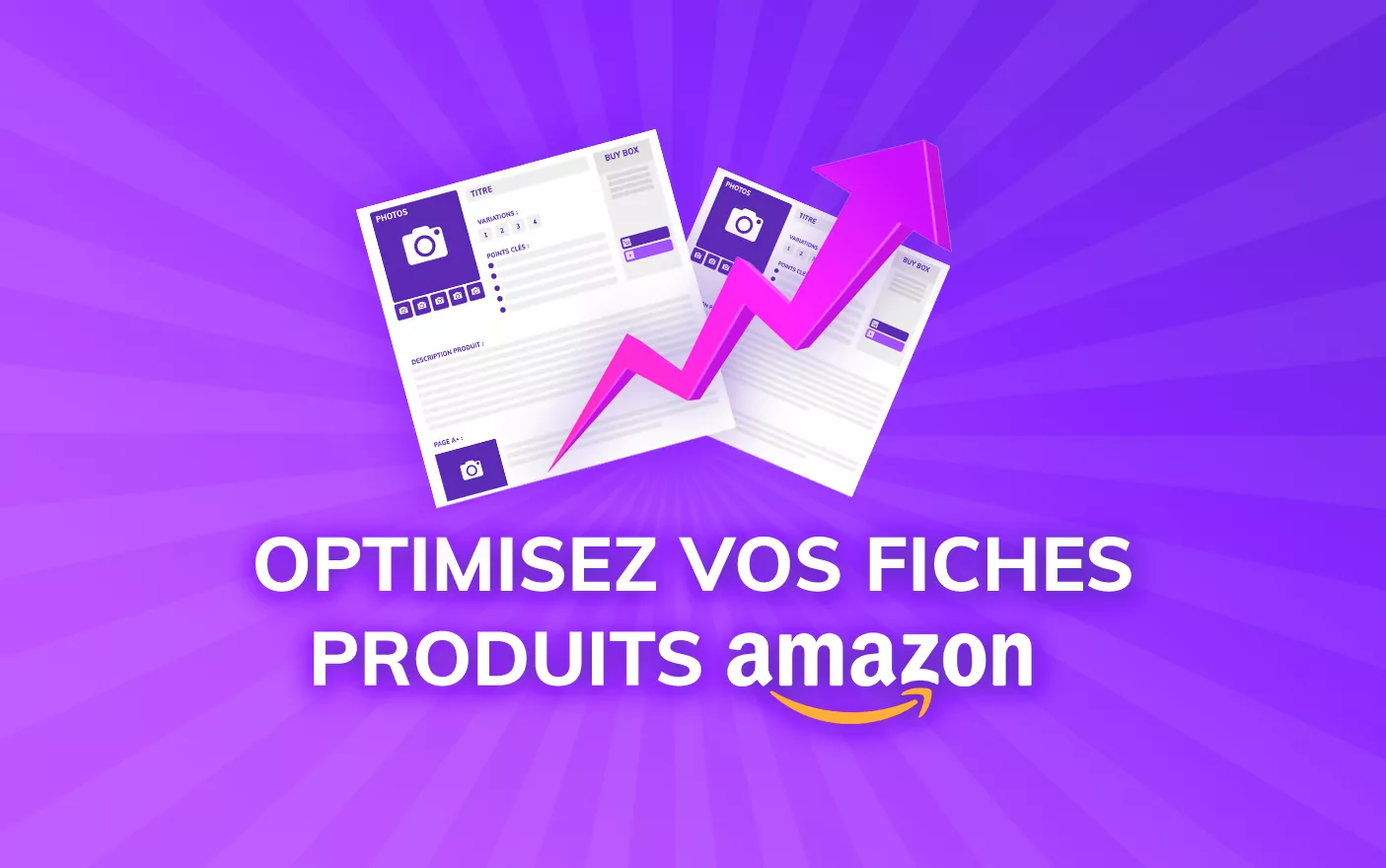
A high density of reviews and A+ content. LLMs read A+ content and reviews as actionable text. A well-constructed A+ review, which answers usage questions, is a source of content that AI can directly use.
The key factor that determines everything else: a presence on at least three marketplaces. This is the most underestimated AI visibility multiplier today.
📌 Key takeaway: An LLM-ready listing isn't a listing "for AI." It's a listing that precisely answers the questions your buyers are asking. What's good for AI is good for conversion.
Multi-marketplaces: the multiplier effect
One marketplace = one source for AI. Five marketplaces = five mutually reinforcing sources. Visibility isn't simply added together; it's multiplied, because the consistency between multiple independent sources strengthens the algorithm's confidence.
The effect also plays out geographically. Being present on Amazon DE, Amazon IT and Amazon ES means multiplying the sources that can be cited by LLMs in European markets, with queries in different languages and distinct usage contexts.
For brands still hesitant to expand across multiple platforms, the argument of AI visibility adds to the classic arguments of risk diversification and access to new audiences. It's no longer just about distribution. It's about being present in the responses your future customers receive even before visiting a marketplace.
📌 Key takeaway: Multi-marketplace strategy is no longer just a lever for business growth. It has become a lever for visibility in AI. The two approaches are mutually reinforcing.
Three concrete actions to begin
First, test your AI visibility. Search for your key categories in ChatGPT and Perplexity. See if the brand appears, in what context, and with what information. This is the basic diagnostic; it takes thirty minutes and often reveals surprises.
Next, audit the consistency of your product listings. Compare titles, specs, and visuals across all marketplaces where the brand is present. Identify inconsistencies, empty fields, and overly generic bullet points. This is often where visibility opportunities are lost.
Identify the two priority marketplaces to finally activate. This should be based on the vertical, the country, and the multi-source coverage strategy. You don't need to be everywhere. You need to be where your buyers are searching and where LLMs are reading.
About eTAIL agency
eTAIL agency supports European brands in deploying and optimizing their sales on marketplaces in Europe: strategy, content, operations, advertising.
Do you want to assess your visibility in AI and structure your multi-marketplace presence? Let's talk.
👉 Contact the eTAIL agency team
Sources: FEVAD 2025 · IBM-NRF January 2026 · BNP Paribas × Harris Interactive August 2025
Our latest publications

%20(2).webp)