Everything you need to know about Social Commerce (feat. MKKM)!
Social network, social commerce, social shopping...what are we talking about?
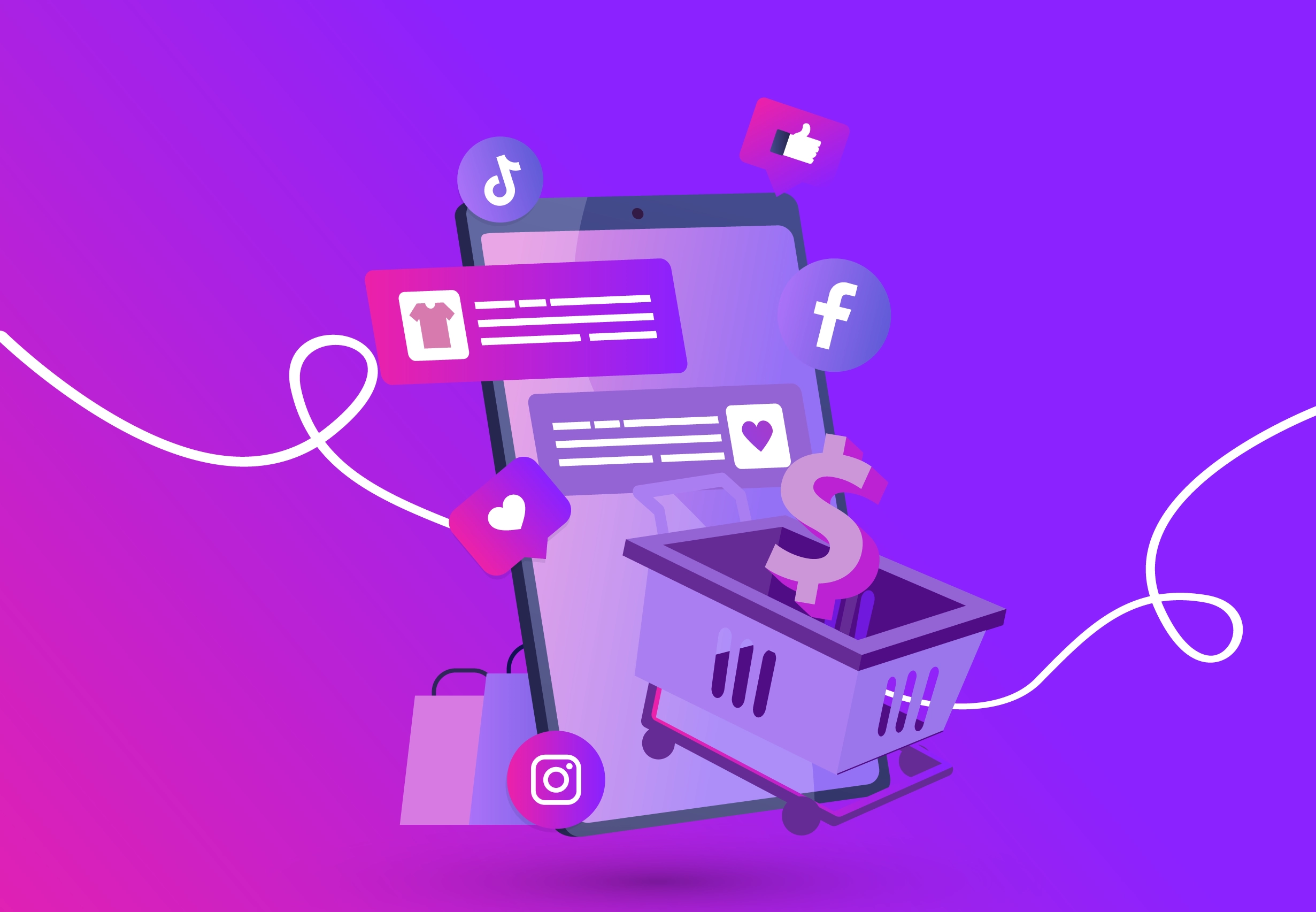
E-commerce is undergoing a profound transformation. Social networks, long relegated to an inspirational role, are now establishing themselves as comprehensive transactional platforms. This evolution, driven by social commerce, is revolutionizing the traditional shopping journey by eliminating the barriers between discovery and purchase. Consumers can now scroll, discover, and buy in just a few clicks, without ever leaving their news feed.
Meanwhile, marketplaces, the historical pillars of online commerce, retain their central role. With their global reach, efficient logistics, and ability to inspire trust, they remain essential for converting interest into concrete sales.
At eTAIL Agency, we are convinced that these two worlds, far from being opposed, complement each other. Social commerce captures attention and engages emotionally, while marketplaces offer a reliable infrastructure to convert this engagement into tangible results.
To enrich this analysis, we collaborated with Mathieu Hosselet, co-founder of MKKM, the specialized agency that places social media and influencer marketing at the heart of its brands' strategies (Carrefour, Rigoni di Asiago, Cash Converters, Babybio, etc.).
Together, we explore the opportunities, but also the challenges, of a hybrid strategy combining these two essential ecosystems.
Follow the leader !
When social media transforms the shopping experience
A change in purchasing behavior
Social commerce doesn't just shorten the customer journey; it profoundly changes how consumers interact with brands. Where purchases were once deliberate and linear, they are becoming more spontaneous, influenced by emotions and social recommendations.
Social media acts as an accelerator: algorithms promote content based on individual interests, fostering a near-personalized discovery experience. This ability to present relevant products at the right time generates impulsive buying behavior.
The rise of content creators
In this ecosystem, content creators become essential intermediaries. Their influence rests on a relationship of trust built with their audience. Unlike traditional advertising campaigns, often perceived as intrusive, creator recommendations are seen as authentic and
“The most effective collaborations aren’t always those involving the most followed influencers, but those where authenticity is palpable. Brands should prioritize creators aligned with their values, because it’s this consistency that generates genuine audience engagement.” – Mathieu Hosselet, co-founder of MKKM
The logistical challenges behind this transformation
Social commerce isn't just about engaging content; it also brings increased pressure on logistics. Consumers, accustomed to the standards of marketplaces like Amazon, expect fast deliveries and easy returns, even when shopping on a social platform.
To meet these expectations, brands must invest in:
- Real-time inventory management, in order to avoid stockouts after a surge in orders triggered by a viral campaign.
- High-performance logistics tracking tools, guaranteeing short and transparent delivery times.
- Seamless coordination between their different channels to offer a frictionless experience, whether it's a purchase on Instagram or on their own e-commerce site.
Asia, a pioneering model of social commerce
An integrated and innovative ecosystem, combining e-commerce and social media
In Asia, social commerce is not an emerging trend, but a deeply ingrained reality in consumer practices. China, in particular, is often cited as the global benchmark. Platforms like Douyin (the Chinese equivalent of TikTok), WeChat, and Xiaohongshu have successfully integrated all aspects of the customer journey: discovery, interaction, purchase, and after-sales service.
Live shopping, the flagship format of these platforms, illustrates this convergence. These interactive sessions, hosted by influencers—or KOLs (Key Opinion Leaders)—are watched by millions of viewers. Between product demonstrations, limited-time promotions, and real-time interactions with the audience, they transform the act of buying into a spectacle. This model, where entertainment and commerce intertwine, generates immediate enthusiasm.
Example: During the famous "Double 11" (the Chinese Black Friday), KOLs like Viya and Austin Li generate astronomical sales in a single session. In 2022, a live shopping campaign orchestrated by Austin Li recorded over $1.9 billion in sales in one day.
What are the advantages of social commerce: in other words, why does this model work so well?
Several factors explain the success of social commerce in Asia:
- The omnipresence of social platforms: In China, WeChat, Douyin, and Xiaohongshu are not just social networks; they are complete ecosystems, where users can communicate, buy, pay, and get deliveries.
- The culture of immediacy: Asian consumers are very receptive to limited offers and campaigns that play on urgency.
- The influence of KOLs: In Asia, influencers are perceived as trusted experts. Their ability to generate sales relies on a very strong relationship with their audience.
What European brands can learn
Attempting to replicate this model in Europe would be a mistake. While live shopping and spectacular campaigns appeal to Asian consumers, European expectations differ significantly.
In Europe, consumers are adopting a more rational and thoughtful approach:
- They are looking for solid guarantees, such as flexible return policies and detailed product descriptions.
- They prioritize transparency, particularly regarding customer reviews and prices.
- They expect more personalized experiences, often better delivered by local micro-influencers.
“In Asia, purchasing is often a collective impulse, amplified by events like massive live shopping experiences. In Europe, caution prevails: consumers compare, verify, and seek proof of reliability before committing. Brands must draw inspiration from Asian models while adapting them to local sensitivities.” – Mathieu Hosselet, co-founder of MKKM
Cultural adaptation, a key to success
To succeed in Europe, brands must leverage three main areas:
- Collaborating with local influencers: Micro-influencers, although having a smaller audience, often inspire more trust due to their close relationship with their followers.
- Favor intimate campaigns: Rather than spectacular live shopping, a more interactive format focused on the quality of dialogue may work better.
- Promoting transparency: Europeans place great importance on the clarity of information (origin of products, prices, reviews).
Social commerce and marketplaces: natural allies?
Two complementary forces at the service of brands
At first glance, social commerce and marketplaces seem to belong to two distinct worlds: the former excels in emotional engagement, while the latter shines with its logistical and transactional power. Yet, far from being opposed, these two ecosystems complement and enrich each other, offering brands unique opportunities to maximize their impact.
Social commerce captures consumers' attention where they spend most of their time: on social media. These platforms, with their immersive formats, are perfect for inspiring, entertaining, and creating an emotional connection with users. But once interest is generated, marketplaces take over. Thanks to their efficient logistics and reputation for reliability, they convert this engagement into concrete sales.
Maximize impact with a hybrid strategy
To make the most of these two channels, brands must adopt an integrated and consistent approach:
- Align messaging and brand image: Descriptions, visuals, and messages shared on social media must be perfectly synchronized with those on marketplaces. Inconsistency could damage consumer trust.
- Leveraging social media data: Insights collected on TikTok or Instagram – such as interests or emerging trends – can be used to optimize campaigns on Amazon or Cdiscount, for example by adjusting keywords or promotions.
- Building bridges between the two ecosystems: By offering links to marketplaces from social commerce campaigns, brands can capture a wider audience while ensuring a smooth and consistent experience.
“Consumers don’t differentiate between channels the way brands do. They want a seamless experience, whether they discover a product on Instagram or buy it on Amazon. Aligning strategies and ensuring continuity in the customer journey is what allows brands to maximize their results.” – Mathieu Hosselet, co-founder of MKKM
Marketplaces: increasingly relevant pillars
Despite the rise of social commerce, marketplaces retain a key role in brand strategy, particularly due to their ability to secure sales volume. They offer:
- Robust logistics: Services like Fulfillment by Amazon (FBA) ensure fast delivery, simplified returns, and efficient inventory management.
- Increased visibility: With millions of daily visitors, marketplaces are essential showcases for brands, even those with a strong presence on social media.
- Enhanced credibility: Product ratings and trust badges, such as "Prime" on Amazon, reassure hesitant consumers.
TikTok Shop: Between Experimentation and Sales Growth
An innovative model, centered on (live) shopping
With TikTok Shop, the short-video platform takes a decisive step in the evolution of social commerce. This service, already active in the UK and Asia, allows users to go directly from discovering a product to buying it, without leaving the app.
For brands, TikTok Shop opens up a dual realm of possibilities: it acts both as a space to test new ideas and as a channel to convert engagement into concrete results. Thanks to its ability to blend viral content and transactions, TikTok Shop redefines the relationship between inspiration and purchase.
A unique experimental space
TikTok Shop offers brands a valuable opportunity to explore new approaches:
- Test creative formats: Short videos, interactive demonstrations, challenges… The platform allows brands to measure the immediate impact of different types of content on user engagement.
- Launching products in real time: TikTok campaigns give instant visibility to new product lines, allowing you to assess their potential before a large-scale rollout.
- Analyzing consumer behavior: Through direct interactions between brands and users, TikTok Shop generates precise insights into what attracts and motivates buyers.
An opportunity to increase sales
Beyond experimentation, TikTok Shop is proving to be a powerful lever for converting engagement into transactions:
- Simplify the customer journey: With clickable videos and direct purchase integrations, TikTok Shop makes taking action immediate and effortless.
- Reaching new audiences: TikTok's algorithm promotes massive content distribution, allowing brands to capture the attention of consumers they might never have reached through other channels.
- Making the purchase more emotional: TikTok campaigns, often immersive and authentic, create an emotional link between the product and the consumer, which strengthens the purchase intention.
“TikTok Shop isn’t just a transactional platform. It’s a goldmine for testing concepts, understanding audience reactions, and refining your approach based on the results. For brands that can adapt quickly, the opportunities are enormous.” – Mathieu Hosselet, co-founder of MKKM
E-commerce: towards a coherent and effective omnichannel approach
Omnichannel: meeting multiple expectations
Today, consumers no longer distinguish between channels. Whether they discover a product on TikTok, search for it on Amazon, or see it in a store, they expect a seamless, consistent, and personalized experience. This behavior requires brands to think of all their touchpoints as an interconnected ecosystem, where each interaction feeds into the next.
Social commerce, with its power to appeal to emotions, is a lever for capturing attention and generating interest. At the same time, marketplaces play a key role in ensuring secure, fast, and reliable transactions. But integrating these two worlds requires a comprehensive approach that goes far beyond simply adding channels together.
The keys to omnichannel success
For brands, successfully achieving this combination rests on three main pillars:
- A seamless customer experience.
Consumers expect the same quality of information and experience, whether they shop through a social network or a marketplace. This implies:
- Harmonized product descriptions: Visuals, titles and features must remain consistent to avoid any confusion.
- A continuity in the promise: If a product is presented as sustainable on TikTok, this value must also be highlighted on Zalando or Cdiscount.
- Mastering logistics flows:
The challenge of omnichannel is not limited to brand image. Inventory management, delivery speed, and the ease of returns are all factors that can strengthen or degrade a brand's perception.
- Inventory synchronization: Brands must avoid stockouts due to a sales spike on a channel.
- Process automation: Integration tools capable of simultaneously managing orders from TikTok Shop and marketplaces are essential.
- Intelligent use of data:
Every customer interaction generates actionable data. Successful brands use these insights to continuously improve their performance.
- Understanding the social audience: Data from TikTok campaigns (interests, behaviors) can guide listings on Amazon.
- Optimizing advertising investments: By identifying the best-performing products or messages on a channel, brands can adjust their efforts elsewhere.
“Brand success hinges on their ability to align experiences across social media, marketplaces, and their own platforms. This creates a sense of consistency perceived by the consumer, and that's where loyalty is built.” – Mathieu Hosselet, co-founder of MKKM
The future: a hybridization of forces
Omnichannel is no longer an option, it's a necessity. Consumers, accustomed to navigating between Instagram, TikTok, and Amazon, expect brands to have a constant presence and the ability to adapt to their needs.
But successfully making this transition requires specialized expertise:
- Understanding the codes of social networks to capture attention and generate interest without appearing intrusive.
- Optimize marketplace listings to ensure smooth and consistent conversion.
- Mastering logistics to offer an impeccable shopping experience.
“Successful brands don’t think in silos, but in ecosystems. Their presence on TikTok or Instagram fuels their performance on Amazon or Zalando, and vice versa. It’s this back-and-forth between social engagement and transactions that makes all the difference.” – Mathieu Hosselet, co-founder of MKKM
At eTAIL Agency, we have made this hybrid approach a priority. As marketplace experts and strategic partners to brands, we know how to combine these different channels to maximize their impact.
Whether you are looking to break into social commerce, optimize your performance on marketplaces, or build a complete omnichannel strategy, our teams are here to support you.
Let's turn your ambitions into concrete results together. Contact us today.
Our latest publications



%20(2).webp)